
October 2026 | ForenSys | Issue 01
Welcome to the first edition of Foresight – our monthly roundup of interesting developments in travel documents, identity fraud, forensics at the border, and emerging technology.
This month, we’re looking at a passport fraud network involving corrupt officials in South Africa, a decades-long identity theft case in the United States, new passport designs and some interesting developments in border identity systems.
Fraudulently issued genuine passports
One of October’s more interesting cases came from South Africa, where authorities made further arrests linked to Project Humulani, a passport fraud investigation dating back to 2022.
The network allegedly worked with corrupt Home Affairs officials to issue genuine South African passports to foreign nationals using a technique known as photo substitution. Essentially, these were genuine passports which contained legitimate South African citizens’ biographic details but photographs belonging to other people.
The passports were reportedly sold for up to R100,000 each. Several hundred fraudulently issued passports have since been blocked or cancelled, and the network’s principal organiser was previously sentenced to 14 years in prison. Actively working towards mitigations, biometric verification now links applicants to their identities throughout the application process potentially closing the loophole. Malfeasance remains a significant threat that bypasses the document security itself to exploit the issuance process.
Source: South African Department of Home Affairs
Conflict, displacement and identity
UNHCR warned in October that nearly four million people are displaced across Burkina Faso, Mali and Niger, including more than 818,000 refugees and asylum seekers.
The continuing humanitarian situation is also affecting registration and documentation services, making it increasingly difficult for displaced people to establish and maintain recognised identities. Challenges of conflict and displacement can make getting new documents or replacing expired ones extremely difficult.
From a border and document examination perspective, these conditions can result in lost documents, gaps in civil registration, expired identity credentials and greater reliance on alternative evidence of identity. They can also create opportunities for criminal networks offering fraudulent documentation or migration services.
Document Watch: New and retiring templates
As part of Foresight, we’ll be highlighting new and updated travel and identity documents worth adding to your reference collections.
Keeping up with these changes is essential for anyone involved in document examination or identity verification. To reliably authenticate a document, you need to know what a genuine example should look like, what security features it should contain, and when that particular version was first and last issued.
These details can be important indicators of fraud. For example, a counterfeit passport might have an issue date that predates the introduction of that document design, or a newer security feature might appear on a document supposedly issued before the feature existed. Without access to accurate, up-to-date references, these inconsistencies can easily be missed.
Need a reliable document reference database?
We recommend Regula Secure Documents Ultimate (SDU) for its comprehensive coverage, ease of use, high-quality document imagery and detailed security feature descriptions. It offers significant advantages over free alternatives such as EDISON TD and PRADO, particularly for organisations that regularly examine travel and identity documents.
Get in touch with ForenSys to find out how your organisation can access Regula SDU.
New and updated documents
Moldova: Ordinary passport: A new passport series entered circulation on 15 October, featuring a polycarbonate data page, and updated advanced security features. This overhaul applies across the whole portfolio including diplomatic and service passports.
Pakistan: ePassport: Pakistani overseas missions began transitioning from conventional machine-readable passport issuance to Electronic Machine-Readable Travel Documents (eMRTD’s or ePassports) on 15 October. This means no more regular Machine-Readable Travel Documents (MRTD’s) will be issued.
Luxembourg: Ordinary passport (LUX-AO-04001): A reference specimen has been added to PRADO, covering this document that was first issued on 11 May 2026. This does highlight a gap between when a document is first issued and when reference material becomes available. ICAO recommends that notifications of new documents is issued no less than 21 days prior to entering circulation and that digital specimens are also promptly uploaded to reference databases.
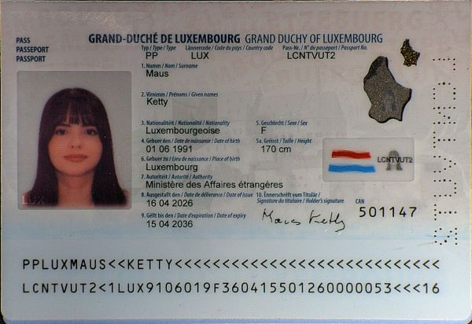
Source: PRADO
Expired and potentially obsolete documents
We’ve also been looking at older document templates to identify versions that may no longer legitimately be in circulation. These are documents which are likely obsolete and any examples encountered with a claimed current validity should be closely scrutinised as an alteration or counterfeit.
Our research is based on publicly available information on issuance dates. Regional differences, extensions, and other factors may affect the expected validity periods. We recommend checking with the issuing authority if there is uncertainty.
| Country and Document | Document Version | Image | Likely Validity Period |
| Ireland — Passport card | IRL-TO-01002 | No longer valid | |
| Denmark — Ordinary passport | DNK-AO-05001 | Children’s passports of this series no longer valid | |
| Latvia — National ID card | LVA-BO-02001 | Children’s passports of this series no longer valid | |
| Georgia — Ordinary passport | GEO-AO-03001 | No longer valid |
Passport images source: PRADO
Developments in border technology, training and resources
Nigeria continued its efforts to modernise border processing during October, with the Nigeria Immigration Service reporting that 87 officers completed specialist Border Control and Immigration Management System (BCIMS) training.
The initiative forms part of a broader move towards intelligence-led border operations and technology-based identity verification. ForenSys recently returned from Nigeria after providing forensic document examination training to personnel from the Nigeria Immigration Service.
As systems become more integrated, the challenge is ensuring that database checks, biometric verification, physical document examination and officer decision-making work together effectively. Effective standard operating procedures that bring together people, processes, and technology backed by robust training programs is a critical aspect of border management and security
Another useful resource this month came from the UK Home Office, which published an updated version of its Guidance on Examining Identity Documents on 21 October.
The guidance covers common document security features, forgery methods and practical checks for identifying suspected fraudulent identity documents. It’s a useful publicly available reference for frontline officers, particularly regarding UK documents.
View the UK Home Office guidance
Final thoughts
A common theme throughout October has been the difference between a genuine document and a genuine identity as highlighted in our South Africa case. With the ever increasing threat of cyber attacks and data theft, genuine identity information is a highly accessible and useful resource for threat actors seeking to fraudulently obtain identity and travel documents.
This month we highlight the importance of training, technologies, and processes that expand beyond the document to seek out these threats. Vigilance of behaviour, intelligence, digital forensics, and open-source intelligence are powerful tools to identify complex fraud cases but also need careful implementation to prevent misuse and infringing upon human rights.
Compiled using publicly available information from issuing authorities, law-enforcement agencies, international organisations and document reference services. Document validity and security features should always be verified against current authoritative references before operational use.